The Gravity of Height: Unpacking the Liability Calculus in High-Rise Construction


The Gravity of Height: Unpacking the Liability Calculus in High-Rise Construction
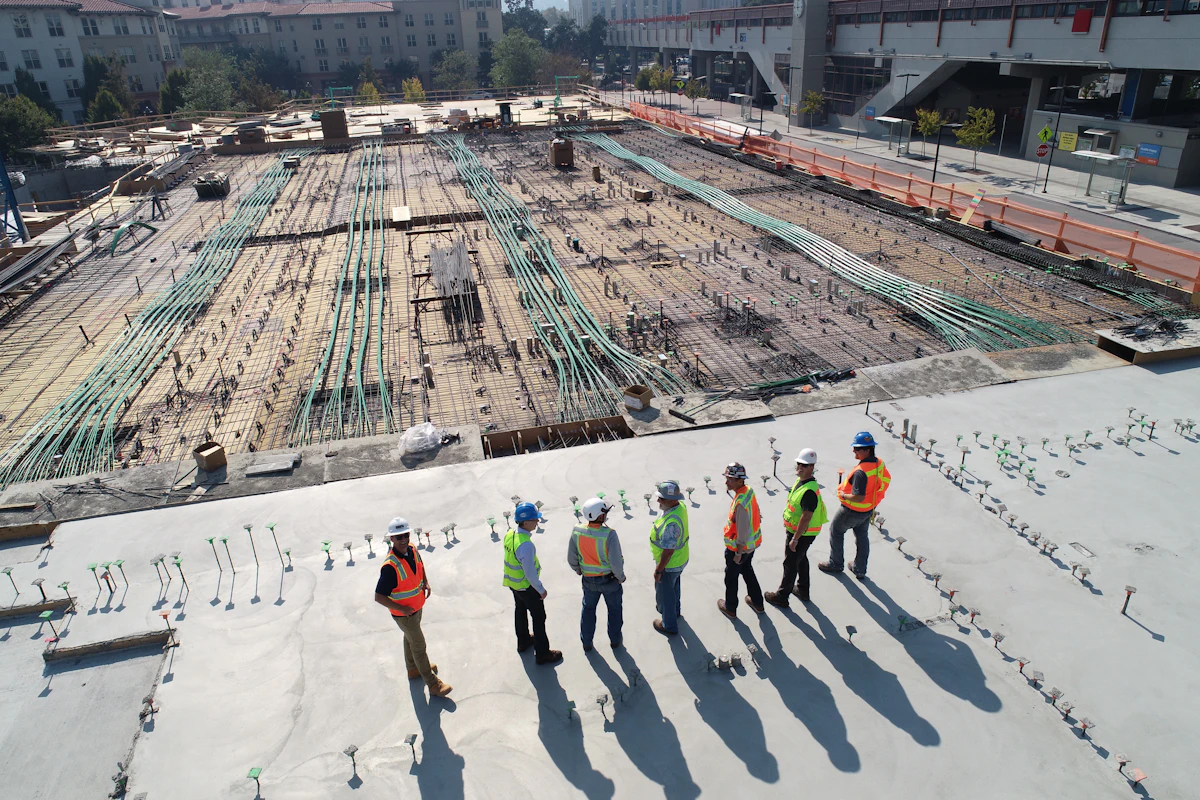
Image: The scale and complexity of high-rise construction create a unique and amplified liability landscape.
Introduction: When Risk Scales Vertically
The construction of a high-rise building is an exercise in managing exponential relationships. While height, material costs, and engineering complexity increase, the associated liability risks do not follow a linear trajectory. They scale at a steeper curve, governed by principles of capital concentration and consequence amplification. A foundational premise of this analysis is that liability in high-rise construction transcends traditional notions of workplace safety or material defect. It represents a systemic financial and contractual challenge, where risk management is less about isolated mitigation and more about the holistic engineering of economic and legal structures capable of withstanding catastrophic potential.
The Liability Multiplier: Deconstructing the High-Rise Risk Profile
The risk profile of a skyscraper is defined by a liability multiplier effect, driven by three interconnected dynamics.
First is consequence amplification. A single point of failure—whether in foundational geotechnical analysis, wind load calculations, or fireproofing application—can trigger cascading systemic losses. The potential damage from a structural event in a 80-story tower encompasses not only the repair cost, which is monumental, but also business interruption for hundreds of tenants, third-party property damage, and unparalleled reputational harm. The severity of consequence fundamentally reshapes the liability calculus from the project's inception.
Second is the network effect of liability. A typical high-rise project involves a dense web of dozens of specialized subcontractors, material suppliers, designers, and engineers. This complexity creates a labyrinth of contractual obligations and complicates post-incident root-cause attribution. A cladding failure may trace back to design specifications, material manufacturing, on-site installation, or a combination thereof. Disentangling this web often leads to protracted legal battles under doctrines of joint and several liability, where any one responsible party can be held liable for the entire damage.
Third is the evolution of new methods and new exposures. Innovative techniques like off-site modular construction shift the locus of risk. Liability exposures migrate from traditional on-site accidents to defects in design for manufacture and assembly (DfMA), transportation logistics, and the precision of on-site fit. These shifts can create gaps in traditional insurance policies, which are often slow to adapt to changing construction methodologies. The modular unit itself becomes a product, introducing product liability frameworks into a domain traditionally governed by construction law.

Image: The intricate network of parties involved in a high-rise project complicates liability chains and risk attribution.
The Financial Architecture of Risk: Insurance and Capital at Height
The insurance market’s response to high-rise construction is a direct reflection of its unique risk profile. Underwriters price in a significant catastrophe premium, reflecting the low-probability, high-severity nature of potential losses. The global reinsurance market, through syndicates at Lloyd’s of London and major firms like Swiss Re and Munich Re, is essential for spreading this concentrated risk across international capital pools. (Source 1: Industry analysis of engineering risk portfolios from major reinsurance firms indicates a non-linear pricing model for structures exceeding 50 stories.)
Beyond elevated premiums, the industry has developed specialized financial instruments. Wrap-up policies, such as Owner-Controlled Insurance Programs (OCIPs) or Contractor-Controlled Insurance Programs (CCIPs), consolidate coverage for all project participants under a single policy. This approach reduces coverage gaps and litigation among subcontractors but places immense risk accumulation on the program insurer. Furthermore, parametric insurance products are emerging. These instruments pay out based on the occurrence of a predefined triggering event (e.g., wind speeds exceeding a specific threshold during construction), rather than assessed losses, allowing for rapid capital injection to stabilize a project following a qualifying incident.
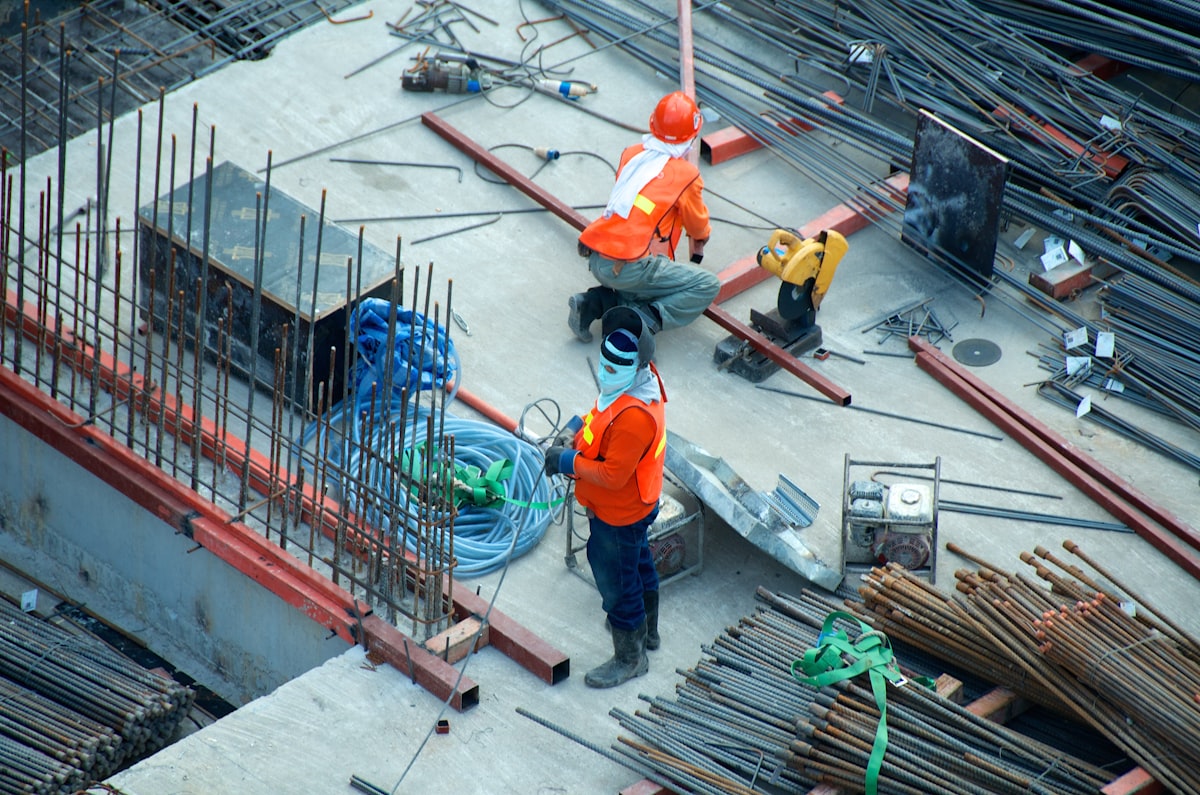
Image: The financial risk of a skyscraper is often layered and segmented across multiple, specialized insurance products.
Legal Frameworks Under Stress: Evolving Doctrines for Towering Fault
Traditional legal doctrines are frequently tested by the reality of high-rise construction. The principle of privity of contract can limit direct legal action between parties not in a direct contractual relationship, creating barriers to recovery for owners against negligent subcontractors hired by a general contractor. Conversely, joint and several liability can have an outsized impact, potentially ensnaring a party with minor fault in a full damages award if other responsible parties are insolvent.
These pressures are catalyzing a shift in project delivery models. Integrated Project Delivery (IPD) represents a significant legal and managerial innovation. IPD contracts typically bring the owner, architect, and key builders together under a single multi-party agreement with shared financial risk and reward. This model aligns incentives, encourages collaborative problem-solving, and is designed to reduce adversarial litigation by contractually fostering transparency and shared liability from the outset. The legal framework moves from a chain of bilateral contracts to a unified, risk-sharing entity.
Conclusion: The Future of Risk in Vertical Construction
The trajectory of high-rise construction points toward increasing capital intensity and technical innovation. The liability landscape will evolve in response. Market predictions indicate a continued hardening of insurance capacity for mega-tall projects, driving further innovation in alternative risk transfer mechanisms, including greater use of insurance-linked securities (ILS) to access capital markets. Legally, the adoption of IPD and other relational contracting models is likely to accelerate, particularly for projects where risk is too concentrated for traditional design-bid-build approaches.
Ultimately, the governance of high-rise construction liability is converging with the discipline of systems engineering. Success is defined not by the absence of failure, but by the creation of a resilient financial, legal, and operational architecture capable of containing and redistributing the immense forces—both physical and economic—unleashed when building at the limits of height.